Women's history walking tours.
History forgot. We didn't.
Questions?
Email us at: hello@shewashere.co
Looking to book a group tour?
Fill out a request form here for rates.

Women's history you probably haven't heard: How about Fanny Fern?
She left her abusive husband at a time when it was completely unheard of and was completely disowned by her family because of it.
Writing was the only skill she had, and she went on to get a book deal for a collection of her essays and was one of the most widely published journalists.
She was offered a weekly column and negotiated for $100 a column at a time when the average journalist was making $25 a column. It made her the highest-paid in the entire United States, regardless of gender. She wrote about taboo topics such as divorce, free love, and prostitution.
She ended up remarrying an editor 11 years her junior and had him sign a prenup to protect her assets.
You can still find her novel Ruth Hall in most bookshops.
__
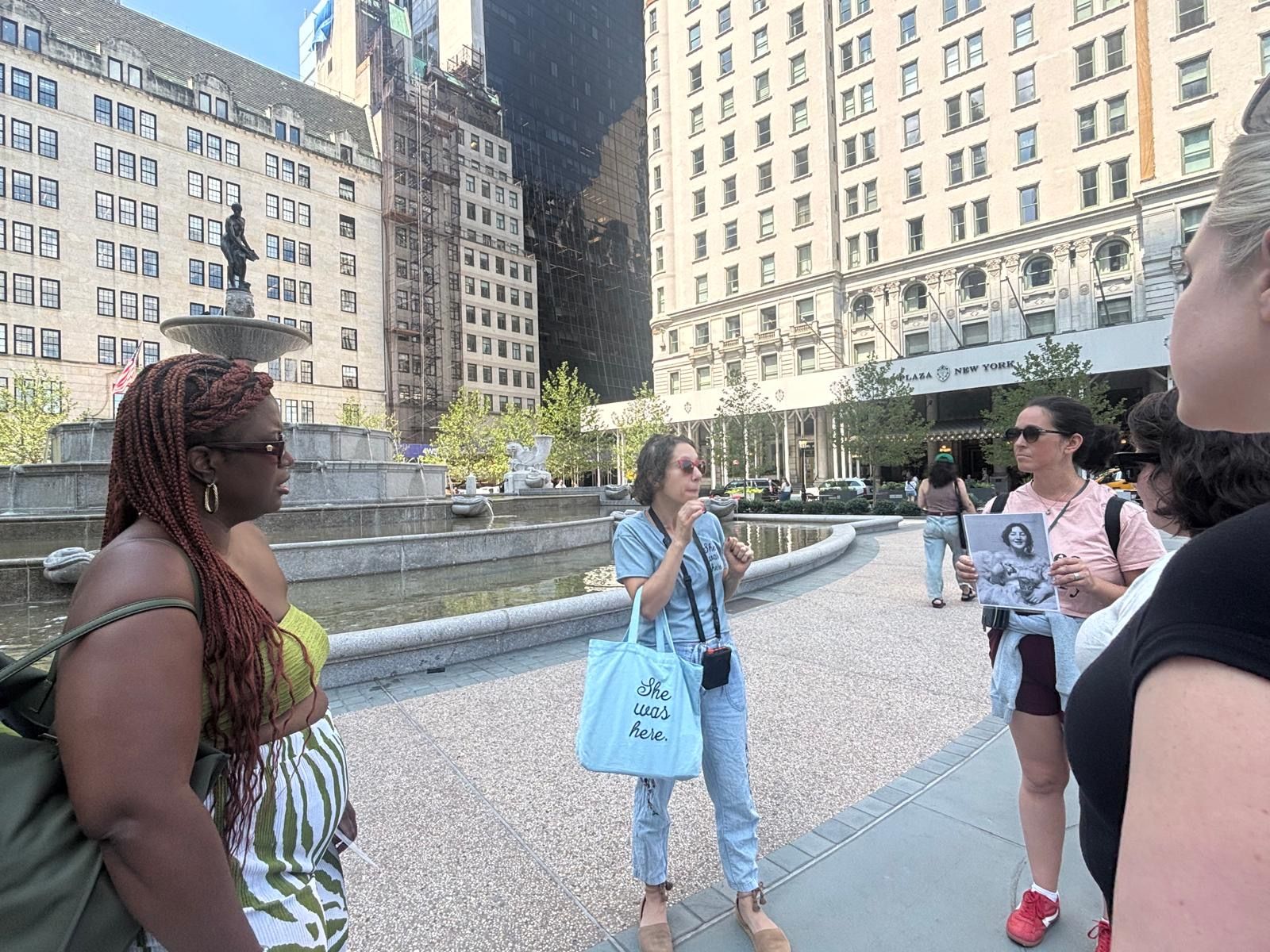
Join us Saturdays and Sundays for a feminist walking tour of NYC.
Comment "UNTOLD" for upcoming dates.
Limited run, so grab them now.

Another news feature, another opportunity for Nikki's NY gestures to go absolutely wild.
Shout out to Nikki's mom, who does not love being on camera but agreed to be a tour participant that day. We swear we didn't realize they were going to interview everyone at the end. 🙈
And thank you so much to the @nhkworldjapan team who reached out and putting so much time into building the segment.
If you’re not in Asia to catch live - you can see the YT link in our bio.

Unique things to do in NYC: learn about the women who were involved in the changing systems that affect us still today.
Like Hattie Hemschemeyer who helped build the modern nurse-midwife system.
Hattie arrived in Harlem in 1931 to train at a new midwifery clinic called Lobenstine.
Until then, midwives, many Black or immigrant women, delivered a large share of NYC births in their own neighborhoods. Reformers grew skeptical of that system. Instead of training those midwives, they built something new: a nursing degree first, then a midwifery credential on top. Most who could afford that pipeline were white.
Hattie became one of Lobenstine’s first graduates, then its director. In 1935, the city put her on a committee to review midwife licensing. That same year, the country’s first school for non-nurse midwives was shut down, on safety claims research at the time already disproved.
Hattie was on both sides of that fight. She helped organize the American College of Nurse-Midwives and became its first president. She also sat on the committee that restricted the old profession.
It’s not a clean story.
Midwifery care today means fewer C-sections and better outcomes for low-risk pregnancies. It can also be hard to access and expensive without insurance.
Black women still account for 55% of NYC’s maternal deaths, but only 23% of its births.
The city has started funding doula and midwifery care in its hospitals. Slow, but there. It feels like the real continuation of Hattie’s work.
—
Want to learn the story of more women who you’ve probably never heard of but probably should know?
We run a 2-hour walking tour every Saturday and Sunday, finishing up in Central Park.
Comment UNTOLD for tickets.

Things to do in NYC this weekend:
Hop on a feminist history walking tour that covers the history of women we can only wish had been included in the history books.
Like Augusta and Adeline Van Buren, who rode over 5,000 miles across the continental U.S. on motorcycles (in pants) to prove that women were capable of serving as military dispatch riders during World War I (at a time when many states had laws against women wearing pants). 🏍️
__
Tour spots are limited - comment UNTOLD for upcoming dates and tag a friend who knows their women’s history. 💪

Local things to do in NYC: How about a women's history walking tour where you learn the stories of women you won't believe you didn't learn about in school?
Public tours run Saturdays and Sundays at 10 am, finishing up in Central Park.
Send this to a friend who thinks they know everything about NYC.
Comment UNTOLD for tickets.

We run women's history tours in NYC.
Reintroducing ourselves along with a rebrand 👋
We're throwing a rebrand launch party in Brooklyn on September 17th at @blazerssportsbar.
Come celebrate with us with DIY tattoos, an unofficial story exchange and cupcakes. 🧁
Comment PARTY for the RSVP link.

Something local to do in NYC? How about a women’s history tour that covers the women you won’t believe you’ve never heard of?
Ellen Stewart worked as a porter at Saks Fifth Avenue. When a customer asked her where she got her dress and Ellen said she’d made it, they gave her a fashion line. She went on to become a successful designer at a time when that was not common.
She was feeling aimless and looking for a passion project, and found a basement for rent in the East Village. Her brother at the time was having a hard time getting into a theater as a playwright because of the color of his skin, so she opened up Cafe La Mama in 1961.
The police raided constantly. She was arrested twice and evicted three times in four years.
Through it all, she supported the artist community, even having people sleep on her floor.
Today, La Mama produces almost a hundred shows a year, and Harvey Firestein once said 80% of what we now consider the American theater originated at La Mama.
_
Want to learn the history of more women we wish hadn’t been left out of the textbooks? Hop on our 2-hour tour running every Saturday and Sunday for 3 months only.
Comment UNTOLD for tickets.

It's Virgo season, and Virgos have a plan for everything, throughout history, in fact.
Here are three favorite historical Virgos.
The artist Virgo - Emma Stebbins
Sculpted the angel on Bethesda Fountain, the first woman to get a public art commission from NYC.
The grassroots Virgo - Antonia Pantoja
Her organization sued the NYC Board of Education and won. The case forced the city to teach bilingual education that still exists today. and became a model for other cities.
The efficient Virgo - Maj Fannie Griffin McClendon
Her WW2 battalion was given 6 months to clear a massive mail backlog. Considered a failing job to prove that women of color weren't up to serving, they did it in 6 weeks. She later became the first woman to command an all-male Air Force squadron.
Virgos get it done 💪💪

Things to do in NYC this weekend? How about a tour that captures women’s side of history.
Like the woman who documented an American incarceration camp.
Miné Okubo won a fellowship in 1938 to study art across Europe, fresh off a master’s degree from Berkeley. War cut the trip short. She came home to San Francisco, working for the WPA’s artist programs, standing below Diego Rivera’s scaffolding as a public educator, explaining his mural to the crowd while he painted 14 feet above her.
Then came Pearl Harbor. In 1942, the government forced her and her family from their home. First to Tanforan, where she lived in a converted horse stall for months. Then to Topaz, a camp in the Utah desert.
Cameras weren’t allowed inside, so she drew everything by hand. Hundreds of sketches, showing exactly what daily life looked like there.
One drawing won a prize at a San Francisco show. An editor at Fortune saw it and offered her a job. It got her out of Topaz before the war ended.
She moved to Manhattan and stayed the rest of her life.
In 1946, she published those drawings as “Citizen 13660,” the first illustrated account of the incarceration. She named it after her own prisoner number.
You can ban cameras. You can’t ban the human experience. 👀
—
Want to learn the story of more women who you’ve probably never heard of but probably should know?
Comment UNTOLD for upcoming tour dates.

Behind the most famous tarot deck in the world is a woman most tarot readers have never heard of.
She painted 80 original works for it. Her name still isn’t on the box.
Pamela Colman Smith studied art at Pratt Institute in Brooklyn. By 1907, she had a solo show at Alfred Stieglitz’s gallery on Fifth Avenue. That gallery went on to introduce Picasso and Matisse to America.
Two years later, occult scholar Arthur Edward Waite, considered the first person to study the history of Western occultism as a real spiritual tradition, hired her to illustrate a tarot deck he was designing.
At the time, decks only illustrated the 22 big, named cards. The Fool. The Wheel of Fortune. The rest just showed a count of swords, cups, or coins, like a regular deck of playing cards. Pamela illustrated all 78. Each one got a full scene, a full story. That’s part of why this deck still feels so easy to read today.
Her payment was one flat fee. When it went to market, it became the Rider-Waite deck. Rider, the publisher. Waite, the scholar. It went on to sell over 100 million copies. Her name wasn’t even on the box.
If you know where to look, she signed it anyway. A small private mark inked into the corner of every single card, the same one found on most of her paintings.
When she passed in 1951, she was broke, buried in an unmarked grave. It wasn’t until decades later that museums were finally able to credit her by name. All thanks to a signature that had been there the whole time. 👀
—
Want to learn the story of more women who you’ve probably never heard of but probably should know?
Comment UNTOLD for the link.

Unique things to do in NYC this weekend:
Hop on a women's history tour that covers incredible women like Frances Perkins, who ended child labor and gave us the weekend; Mabel Ping Hua Lee, who fought for suffrage, even when she herself couldn't vote under the Chinese Exclusion Act; and Mabel Fairbanks, the godmother of Black skating.
The tour only runs for the next few months, grab your spot.
__
Comment UNTOLD for tickets.

A NYC walking tour but make it women’s history.
That’s where you’ll stories like the Harvard professor who said in 1873 that women’s bodies were too fragile for higher education. He published a book arguing women who studied too hard would become infertile, sickly, and eventually devolve into a third sex he called “agene,” comparing them to sexless termites. It became an international bestseller.
Mary Putnam Jacobi, the first woman admitted to medical school in Paris and practicing in NYC at the time, decided to test the claim with actual science.
Harvard had an essay prize open on the topic, judged anonymously. She surveyed nearly 1,000 women, testing herself as well, while pregnant. She combined it with hard physiological data most doctors of the era didn’t have. The result: no evidence education put women’s health at risk.
Knowing medical journals routinely rejected research by women, she submitted it without her name.
In 1876, Harvard awarded her its own Boylston Prize, only learning afterward the anonymous winner was a woman.
The paper helped end the era of “rest cures” for women and pushed institutions like Johns Hopkins to finally open their doors to female students.
—
Want to learn the story of more women who you’ve probably never heard of but absolutely should know?
Comment UNTOLD forupcoming dates.

Best thing to do in NYC this weekend: a women's history tour that inspires some and enrages others.
Come see which one it is for you. 😇🔥
__
Comment UNTOLD on all caps for upcoming dates.

Things to do in NYC this weekend: learn the story of incredible women who were left out of the textbooks.
Like Jane:
In 1868, an all-male press club refused to let Jane Cunningham Croly into a dinner for Charles Dickens.
So she started her own club instead.
Jane was an established journalist by then, syndicated nationwide, on staff at the New York World and later the New York Times. Still, when the Press Club threw its Dickens dinner, not one female journalist who applied got in.
So Jane founded Sorosis, named for a fruit made of many flowers fused into one. The first meeting was at Delmonico’s, a restaurant where women weren’t supposed to dine without a man. The group walked in together. No men. First professional women’s club in the country.
When Jane died in 1901, the New York Times called her the best-known woman journalist in America.
Sorosis is now the General Federation of Women’s Clubs, still active today with over 63,000 members.
—
Want to learn the story of more women who you’ve probably never heard of but probably should know?
Comment UNTOLD for the link.

Women in STEM we wish U.S. school programs would teach:
Elizabeth Blackwell. Rejected by 29 medical schools. The 30th let the all male student body vote on her admission, as a joke. They voted yes, also as a joke. In 1849 she graduated top of her class, the first woman in America to earn a medical degree.
Marie Maynard Daly. Grew up in Queens watching her father drop out of Cornell’s chemistry program for lack of money. In 1947, she became the first Black woman in America to earn a PhD in chemistry, in three years.
Rosalyn Yalow. Rejected by every physics program she applied to, for being a woman and for being Jewish. She built her research out of a janitor’s closet at the Bronx VA. In 1977, she became the first American born woman to win a Nobel Prize in medicine.
Chien-Shiung Wu. Ran the experiment that proved a theory two male colleagues had only worked out on paper. In 1957, they won the Nobel Prize for it. She got a thank you in the speech and nothing else.
Patricia Bath. Grew up in Harlem, daughter of the first Black subway motorman in NYC. In 1988, she patented a laser device for cataract surgery, the first Black woman physician in America to hold a medical patent.
Plus the two who we couldn’t fit into the video!
Margaret Crane. A 26 year old graphic designer, not a scientist. She turned a lab full of test tubes into the first at home pregnancy test. She’s listed as the inventor on the patent. She was never paid for it.
Mary Putnam. A Harvard doctor once published a book claiming higher education would damage women’s reproductive organs. In 1876, Mary answered him with data and became the first woman to win Harvard’s own Boylston Prize.
Want to learn the story of more women who you’ve probably never heard of but probably should know? 👀
Comment UNTOLD for the link.

Unique things to do in NYC this weekend. How about a walking tour that covers the stories of all the women you don't believe you've never heard of.
Like Brooklyn raised Eunice Hunton Carter who became one of the first Black women in the country to graduate law school, at a time when almost none would admit one. By 1935, she was the first Black woman assistant district attorney in New York state.
Working the city’s Women’s Court, she noticed the same bail bondsmen kept showing up across prostitution cases tied to Harlem’s policy racket. Her theory: this wasn’t random street crime. It was organized. She convinced her team to wiretap the bondsmen’s offices, and that evidence became the backbone of the case against Lucky Luciano. She was the only woman on the ten person prosecution team, using a racketeering theory that had never convicted a mob boss before.
Luciano was convicted on 62 counts. The headlines went to special prosecutor Thomas Dewey, who rode the win almost to the presidency.
In 1935, Eunice became the first black woman assistant district attorney in the state of New York but otherwise was left out of the story so completely that when a fictionalized version of her showed up on HBO’s “Boardwalk Empire,” viewers assumed a Black woman prosecutor taking down a mob boss had to be made up.
She wasn’t. 👀
—
Want to learn the story of more women you should know?
Comment UNTOLD for the link.

NYC history we wish were more widely known...the woman who made it.
Every weekend in NYC, we run a 2-hour women's history tour from Midtown to Central Park, covering the stories of women you won't believe you've never heard of.
Send this to a friend who would join with you.
Comment UNTOLD for upcoming dates (3 months only!)

Women have been through it before and have overcome, fallen down, and got back up.
It's important to tell their stories so that we don't forget.
History might have forgotten, but we didn't.
Join our Women's History tour running every Saturday and Sunday in NYC. You'll leave enraged, but in a good way.
Comment UNTOLD for upcoming dates.

New things to do in NYC this weekend. How about a women's history tour that covers the stories of women you won't believe you've never heard of?
Send this to a friend who loves historical novels.
Comment UNTOLD for upcoming dates.

In Central Park, the first statue of a historical woman wasn't added until 2020. 🫠
Send this to a friend who thinks they know NYC history, and book our 2-hour women's history tour that runs every Saturday and Sunday.
Limited spots.
Comment UNTOLD for upcoming dates.

Women's history that should be included in every U.S. history class textbook (In our humble opinion, honestly, we'd even take a little box at the bottom of the page.)
Frances Perkins
First woman in a U.S. presidential Cabinet, serving as FDR’s Secretary of Labor for 12 years. She personally witnessed the Triangle Shirtwaist Factory fire in 1911, then built unemployment insurance, the end of child labor, and the 40-hour workweek into federal law.
Elizabeth Jennings Graham
In 1854, she was thrown off a segregated New York City streetcar. She sued, and won, a full century before Rosa Parks. Her lawyer was a 24-year-old named Chester A. Arthur, who’d go on to become president.
Mabel Ping-Hua Lee
Led a women’s suffrage march through NYC on horseback at 16. Went on to become the first Chinese woman in the U.S. to earn a PhD in economics. Couldn’t legally vote herself until 1943, when the Chinese Exclusion Act was repealed.
Dorothy Parker
Theater critic, poet and writer famous for her wit and spot at the Algonquin Round Table. When she died in 1967, she left her entire literary estate to Martin Luther King Jr., a man she’d never met. When he was assassinated the next year, it passed to the NAACP, which still collects royalties on her work today.
Emily Roebling
Ran construction of the Brooklyn Bridge for 11 years after her husband collapsed, with no engineering degree and no formal title. The bridge didn’t get a plaque with her name on it until 1951, 48 years after she died.
The Black Angels
300 Black nurses recruited to Sea View Hospital on Staten Island starting in 1929, after white nurses quit en masse rather than treat tuberculosis patients. In 1951, they ran the first human trial of the drug that cured TB. The doctor credited with the cure was quoted saying that it would not have worked without those nurses.
@mariamsmilios uncovered their story recently and wrote a fabulous book we highly recommend. 💪
__
Want to hear the stories of even more women you won't believe you've never heard of? Join our 2-hour women's history tour that goes from Midtown to Central Park every Saturday and Sunday in NYC.
Comment UNTOLD for the details. 💬

Things to do in NYC that can bring you joy: A walking tour that covers all the women left out of the textbooks.
this 2-hour tour, running Saturdays and Sundays, tells you the story of women you won't believe aren't household names.
Send this to your friend who thinks they know NYC history.
Comment UNTOLD for upcoming dates - spots are limited.

What to do in NYC this weekend to bring you some joy? How about a 2-hour women's history walking tour?
Our tour goes from Midtown to Central Park, and we cover the stories of incredible women you won't believe you've never heard of.
Send this to your friend who could use some positive weekend plans.
Comment UNTOLD for upcoming dates.

Central Park's ice rink has a piece of figure skating history most people never hear about.
In the 1930s, Mabel Fairbanks was barred from competing because of the color of her skin, so she coached champions instead.
Mabel came to New York at 14 alone after her mother died in Florida. She moved in with her brother, who ran a fish market in Harlem.
There was one woman who she could tell was struggling, so she started giving her a little more fish for a little less money. Her brother found out, fired her, and sent her off with only $5. She ended up sleeping in Central Park.
A woman walked by pushing a baby carriage, learned what had happened, and offered her a live-in nanny job in an apartment overlooking the park. From that window, Mabel watched the skaters glide across the ice below, and she wanted to try.
She found a pair of skates a size too big at a pawn shop and haggled the guy down to $1. She taught herself on the bumpy natural ice at Morningside Park, then figured out why she kept falling. The good ice was at Central Park.
Then she saw Sonja Henie, already a three-time Olympic gold medalist, skate in "one in a million".
Mabel said that was the moment where she knew she wanted to be a skater.
She found an indoor rink, but the cashier turned her away. She waited until everyone else had gone in and tried again. The manager finally let her through.
She kept coming back. She clipped free skate coupons from the newspaper, got her whole neighborhood clipping them too, and skated every night she could.
When people complained she should leave because they didn't want to skate with her on the ice, she told them she'd paid to get in like everyone else and that they should take it up with the manager.
Instructors started Noticing her and teaching her moves, one had her demonstrate back crossovers when a paying student couldn't land them. Another taught her to skate backwards, which became her signature. She was so fast that a newspaper pitted her against real speed skaters, and her backward speed beat their forward speed.
Within six months, Time Magazine wrote that she was outskating almost every white amateur in the sport.

Overlooked women’s history: Black skating.
Mabel Fairbanks grew up in Harlem, working as a live-in babysitter for a family with a window over Central Park. She would watch the skaters glide across the frozen lake and was absolutely smitten.
She bought her first pair of skates at a pawn shop for a dollar to teach herself to skate. They were too big, so she had to stuff the toes.
When she finally made it to a real rink, the manager turned her away because of her race. She kept coming back anyway. Week after week, until a manager let her in.
Even in the rink, she still couldn’t join the skating club. No club membership meant no official tests, no competitions, no path to the Olympics, no matter how good she was.
In the 1940s, Mabel moved to LA. Those rinks were segregated too, so she performed in nightclub ice shows instead.
She spent years as a headline performer with Hollywood on Ice, Ice Follies, and Rhythm on Ice, and toured internationally with Ice Capades in Mexico.
Newsreel cameras filmed her skating, putting her in front of white moviegoers who’d never seen anything like her.
By the mid 1950s she was appearing on Frosty Frolics, one of the first televised ice shows in the country.
She eventually shifted her focus to coaching. Her students included Olympic champions Scott Hamilton and Kristi Yamaguchi, and five time national champions Randy Gardner and Tai Babilonia, who she paired together herself.
Tai would go on to become the first skater of Black descent to compete for the United States at the Winter Olympics.
In 1997, Mabel became the first African American inducted into the U.S. Figure Skating Hall of Fame.
But being first isn’t always the win it sounds like.
__
Learn about Mabel and other incredible women you won’t believe you never heard of on this 2-hour women’s history tour of New York City, running Saturday and Sunday.
Limited spots available.
Comment UNTOLD for the link.

Things to do in Astoria this weekend:
A night of women's history right here in Astoria, Queens.
Hear about women in NYC's history you won't believe have been left out of the textbooks, as well as women today doing incredible things for the neighborhood.
Limited spots. $25 gets you entrance, a drink, and snacks.
Send this to your friend who loves NYC history.
Comment "Astoria" for the RSVP link.

Things to do in NYC before summer's over:
A night of storytelling in Astoria, Queens.
Hear about women in New York City's history you won't believe you've never heard of, plus learn about women today who are doing incredible things for the neighborhood.
Limited spots. $25 gets you entrance, a drink on us, and snacks.
Send this to your Queens friends (Probably not your Brooklyn friends...they're not going to trek out)
Comment ASTORIA for the RSVP link.

Things to do in New York City this weekend:
Hop on a women's history walking tour uncovering all the women you won't believe you've never heard of before.
The 2-hour tour runs every Saturday and Sunday, and private tours whenever!
Send this to a friend who thinks they know NYC history.
Comment UNTOLD for upcoming dates.

A overlooked women in NYC history: meet Frieda Zames.
She graduated Phi Beta Kappa, magna cum laude, in mathematics.
And still couldn’t get hired in her field.
Frieda grew up in Brooklyn with polio. As a teenager, she was already winning academic prizes and in 1959, she graduated Phi Beta Kappa and magna cum laude from Brooklyn College.
But she still struggled to find a job in mathematics. She went on to earn her doctorate anyway, and in 1978 won the George Pólya Award from the Mathematical Association of America for her original work on a shape called the Schwarz lantern.
She became an assistant professor at the New Jersey Institute of Technology and taught there for decades.
By the 80s, Frieda was organizing.
She helped lead Disabled in Action, a civil rights group fighting to make New York accessible, and served as its president more than once.
She launched the One Step Campaign, going door to door, starting with her own favorite pastry shops, demanding businesses build entry ramps. More than 350 businesses ended up complying.
And she was central to the fight that made New York City buses wheelchair accessible, and helped push through Local Law 58 of 1987, an accessibility statute New Yorkers still call the City ADA, passed three years before the federal version existed.
In 1994, she co-signed a letter to the New York Times about the group’s campaign to remove single step barriers at city stores, one step at a time, literally. She spent years lobbying the city for wheelchair accessible taxis and ferries.
In 2001, she and her sister Doris published The Disability Rights Movement: From Charity to Confrontation. It’s used today as a disability rights textbook.
Frieda died in 2005. Twenty years later, about half of NYC taxis are accessible.
The corner where she lived, First Avenue and East 4th Street, is now officially named Frieda Zames Way.
__
Curious about other incredible women who you’ve somehow never heard about?
Join our 2-hour walking tour starting in Midtown Manhattan and finishing in Central Park, running Saturdays and Sundays.
Comment UNTOLD for the link.

Best thing to do in New York City?
How about a women's history tour that tells you facts like the first statue of historical women didn't go up in Central Park until 2020.
You read that right.
Send this to a friend who's looking for something new to do on your next trip.
__
Comment UNTOLD for upcoming dates.
Public tours run Saturdays and Sundays, and private tours are available whenever!

Unique things to do in NYC - NYC women's history walking tour that covers all the women you wish you had learned about in school.
Like Mabel Ping Hua Lee led 10,000 suffragists up Fifth Avenue at 16.
The 19th Amendment passed but excluded her, because of the Chinese Exclusion Act.
Send this to someone who thought they knew the suffrage story.
__
Comment UNTOLD for upcoming tour dates running Saturdays and Sundays.

Overlooked women in history…
Meet Isabella Goodwin.
Isabella, for 15 years, was a police matron. That meant cleaning cells and searching female prisoners, not solving crimes. Her husband, a police officer, had died young, leaving her a widow with four children, so she took the civil service exam as a way to make money.
Long before the case that made her famous, she was already doing detective work off the books, undercover as a desperate client. She exposed fake fortune tellers and healers preying on frightened women.
Then, in 1912, a gang known as the Taxi Bandits robbed a cab in broad daylight. They took $25,000, and the department’s detectives couldn’t catch them, so they sent in Isabella.
She took a job as a boarding house scrub woman for $6 a week, scrubbed floors, cooked meals, and listened at keyholes.
She finally got a lead when the gang’s girlfriend bragged to a friend about the taxi job.
With the confirmation, the arrests came fast. She got a shield and was the first woman in the country to hold the rank of first-grade detective. Decades later, in The Alienist, Dakota Fanning played a character based on her.
But the shield didn’t close the gap, she was still making less than the men. It just gave her a rank.
__
Curious about the other women that have been left out of the history books?
Comment UNTOLD for the link to our NYC women’s history tours running Saturdays & Sundays.

Historical women in NYC that you probably haven't heard of...
Meet Isabella Goodwin.
Isabella, for 15 years, was a police matron. That meant cleaning cells and searching female prisoners, not solving crimes. Her husband, a police officer, had died young, leaving her a widow with four children, so she took the civil service exam as a way to make money.
Long before the case that made her famous, she was already doing detective work off the books, undercover as a desperate client. She exposed fake fortune tellers and healers preying on frightened women.
Then, in 1912, a gang known as the Taxi Bandits robbed a cab in broad daylight. They took $25,000, and the department's detectives couldn't catch them, so they sent in Isabella.
She took a job as a boarding house scrub woman for $6 a week, scrubbed floors, cooked meals, and listened at keyholes.
She finally got a lead when the gang's girlfriend bragged to a friend about the taxi job.
With the confirmation, the arrests came fast. She got a shield and was the first woman in the country to hold the rank of first-grade detective. Decades later, in The Alienist, Dakota Fanning played a character based on her.
But the shield didn't close the gap, she was still making less than the men. It just gave her a rank.
__
Curious about the other women that have been left out of the history books?
Join our 2-hour tour of New York City's women's history, running Saturdays and Sundays.
Comment UNTOLD for the link.

What to do in Astoria, Queens this weekend?
We're teaming up with @womenofastoria for a night of the stories of women today and in the past who've had an incredible impact on our city, and you've probably never heard their names.
$25 gets you entrance, your first drink on us, snacks, and a Sunday afternoon of community.
All at @chateaulewoof. 🐕
Limited spots - so send to your history-loving female empowerment friend now.
Comment ASTORIA for the RSVP link.

Things to do in NYC this weekend.
Skip it if you like your history with the boring parts left in.
Take it if you want two hours, eight women, zero names you learned in school.
Comment UNTOLD for the link.

Women who changed history. Antonia Pantoja founded ASPIRA, took the Board of Education to federal court, and won. Our women’s history tour runs Saturdays and Sundays.
Send this to a New Yorker who thinks they know this city.
Comment UNTOLD for the link.

A NYC walking tour you won't believe didn't exist before...One that covers the stories of the women who actually built this city. Figuratively and literally.
Like Emily Warren Roebling, who basically built the Brooklyn Bridge.
When her husband became too ill, Emily started going to the site instead.
She met with the board of trustees. She negotiated with subcontractors. She managed a staff of engineers who answered to her, not him. For eleven years, she ran construction while Washington watched from a window in Brooklyn Heights. He later said he could hardly see.
When the bridge opened in 1883, Emily rode across it the night before the official ceremony. She carried a rooster for good luck.
She was 56 when she earned her law degree from NYU. It took until 1950 for a plaque with her name to go up at the bridge.
In a letter to her son, she wrote that she had more brains, common sense, and know-how than any two engineers.
She never got the title. We still know who did the work.
__
Want to join us and learn the stories of more women?
Send this to a friend who thinks they know NYC history and comment UNTOLD for upcoming dates.

Something to do in NYC that you probably haven't heard of before: a women's history walking tour.
We go through the stories of women too few have heard about, but absolutely everyone should know.
Like Emily Warren Roebling, who basically built the Brooklyn Bridge.
When her husband became too ill, Emily started going to the site instead.
She met with the board of trustees. She negotiated with subcontractors. She managed a staff of engineers who answered to her, not him. For eleven years, she ran construction while Washington watched from a window in Brooklyn Heights. He later said he could hardly see.
When the bridge opened in 1883, Emily rode across it the night before the official ceremony. She carried a rooster for good luck.
She was 56 when she earned her law degree from NYU. It took until 1950 for a plaque with her name to go up at the bridge.
In a letter to her son, she wrote that she had more brains, common sense, and know-how than any two engineers.
She never got the title. We still know who did the work.
__
Want to join us and learn the stories of more women?
Send this to a friend who thinks they know NYC history and comment UNTOLD for upcoming dates.

On our NYC tour we tell the stories Of the women we wish we'd learned about in school.
Like Emily Hang who in 1924 drove across the country in a Model T. Her letters home were so good, her brother-in-law sent them to The New Yorker. They bought some for publication, and her writing career began. Over her lifetime, she’d write more than 200 articles and 54 books.
After graduating, she took a job at an oil company. As a woman, they wouldn’t let her out in the field, so she quit.
Inspired by Charles Lindbergh’s solo flight across the Atlantic, she wanted an adventure of her own. She taught geology at Hunter College for 25 dollars a week, saving toward what she called her Africa Fund. In 1930, she used it to live with a community of Pygmies in the Congo, for two years.
In 1935, The New Yorker sent her to China as an official correspondent.
She met Mao and became close with the Soong sisters, one of the most powerful families in China.
While in Shanghai, she started smoking opium. Within a year, she was addicted. A hypnotist eventually cured her.
In Hong Kong, she fell in love with a married British officer. She got pregnant, and when he was captured by the Japanese, she smuggled him food for months, pretending to be Eurasian to avoid internment herself.
When he was released, and by then divorced, they married and had a second child.
Her daughter once told her she wasn’t the kind of mother you read about. The kind who stays home and bakes cakes.
She told her, “Go find anybody who sits at home and bakes cakes.”
—
Want to learn the story of more women who you’ve probably never heard of but probably should know?
Comment UNTOLD for the link.

Our NYC walking tour includes the story of a woman who packed more into one life than most people manage in three.
Meet Emily Hahn.
She was born in St. Louis in 1905. Her mother was a suffragist. Her father sold dry goods.
At the University of Wisconsin, an adviser told her women weren’t capable of grasping mechanics or higher math. She stayed anyway, and is believed to be the first woman to graduate from the school with a mining engineering degree.
In 1924, she and a friend drove across the country in a Model T. Her letters home were so good, her brother-in-law sent them to The New Yorker. They bought some for publication, and her writing career began. Over her lifetime, she’d write more than 200 articles and 54 books.
After graduating, she took a job at an oil company. As a woman, they wouldn’t let her out in the field, so she quit.
Inspired by Charles Lindbergh’s solo flight across the Atlantic, she wanted an adventure of her own. She taught geology at Hunter College for 25 dollars a week, saving toward what she called her Africa Fund. In 1930, she used it to live with a community of Pygmies in the Congo, for two years.
In 1935, The New Yorker sent her to China as an official correspondent.
She met Mao and became close with the Soong sisters, one of the most powerful families in China.
While in Shanghai, she started smoking opium. Within a year, she was addicted. A hypnotist eventually cured her.
In Hong Kong, she fell in love with a married British officer. She got pregnant, and when he was captured by the Japanese, she smuggled him food for months, pretending to be Eurasian to avoid internment herself.
When he was released, and by then divorced, they married and had a second child.
Her daughter once told her she wasn’t the kind of mother you read about. The kind who stays home and bakes cakes.
She told her, “Go find anybody who sits at home and bakes cakes.”
—
Want to learn the story of more women who you’ve probably never heard of but probably should know?
Comment UNTOLD for the link.

There’s a woman on our NYC walking tour who kicked an opium addiction, and that’s not even the wildest part of her story.
She smoked opium because it seemed romantic. A hypnotist eventually cured her of the addiction, but that’s the least interesting part of what happened to her.
Meet Emily Hahn.
She was born in St. Louis in 1905. Her mother was a suffragist. Her father sold dry goods.
At the University of Wisconsin, an adviser told her women weren’t capable of grasping mechanics or higher math. She stayed anyway, and is believed to be the first woman to graduate from the school with a mining engineering degree.
In 1924, she and a friend drove across the country in a Model T. Her letters home were so good, her brother-in-law sent them to The New Yorker. They bought some for publication, and her writing career began. Over her lifetime, she’d write more than 200 articles and 54 books.
After graduating, she took a job at an oil company. As a woman, they wouldn’t let her out in the field, so she quit.
Inspired by Charles Lindbergh’s solo flight across the Atlantic, she wanted an adventure of her own. She taught geology at Hunter College for 25 dollars a week, saving toward what she called her Africa Fund. In 1930, she used it to live with a community of Pygmies in the Congo, for two years.
In 1935, The New Yorker sent her to China as an official correspondent.
She met Mao and became close with the Soong sisters, one of the most powerful families in China.
While in Shanghai, she started smoking opium. Within a year, she was addicted. A hypnotist eventually cured her.
In Hong Kong, she fell in love with a married British officer. She got pregnant, and when he was captured by the Japanese, she smuggled him food for months, pretending to be Eurasian to avoid internment herself.
When he was released, and by then divorced, they married and had a second child.
Her daughter once told her she wasn’t the kind of mother you read about. The kind who stays home and bakes cakes.
She told her, “Go find anybody who sits at home and bakes cakes.”
—
Want to learn the story of more women who you’ve probably never heard of but probably should know?
Comment UNT

A New York City history tour that covers the stuff you probably haven't heard... Let's talk about the women.
These stories are not hard to find. There are articles, there are books, and yet these women have somehow been left out of history's vernacular.
We want to change that.
Join us for a tour from Midtown to Central Park, where we share stories of women you won't believe you've never heard of.
Send this to a friend who loves NYC history.
_
Comment UNTOLD for upcoming dates.

Things to do in NYC this weekend: a women’s history walking tour, which apparently, a lot of people have opinions about…
Comment UNTOLD for the link.

Best things to do in NYC: a women's tour that gives you the full story. Which apparently is not everyone's cup of tea... 🧐
Comment UNTOLD for upcoming dates.

Things to do in NYC this weekend: a women’s history walking tour that apparently makes some people very upset. 🤷♀️
Comment UNTOLD for the link.

Local things to do in NYC this weekend: women's history that you wont believe you've never heard of!
Meet Adeline and Augusta Van Buren, sisters from Brooklyn and descendants of President Martin Van Buren.

New things to do in NYC this weekend: get the history you never learned in school, like these two Brooklyn sisters who broke a law you didn’t know existed.
These sisters were pulled over again and again for the same reason. Wearing pants on a motorcycle.
Meet Adeline and Augusta Van Buren, sisters from Brooklyn and descendants of President Martin Van Buren.
In July 1916, they climbed onto matching Indian motorcycles and rode west. Their goal was to prove women could serve as military dispatch riders, at a time the Army wouldn’t even let them try.
They wore leather riding breeches instead of skirts, because they were riding motorcycles.
In town after town, police stopped them for wearing men’s clothing in public.
Many states at the time had what were often called “masquerade laws,” dating back to the mid-1800s, against appearing in public “in a dress not belonging to his or her sex.” The laws would later become a tool used increasingly against the queer community, but at this point they were often used against women.
There’s no record of the sisters being formally arrested. It still made for a long ride.
It wasn’t until 1923, seven years later, that the U.S. Attorney General formally declared it legal for women to wear trousers.
It took them about 60 days to reach Los Angeles, making them among the first women to ever cross the country by motorcycle.
They petitioned the Army to become dispatch riders, having just proven they could do the work.
They were turned down.
Adeline went on to earn a law degree from NYU, becoming a lawyer at a time when less than 3 percent of practicing lawyers were women. Even as late as 1970, it was still under 5 percent.
Augusta became a pilot, flying with Amelia Earhart’s Ninety-Nines, the female aviators’ organization.
It wasn’t until 2002 that both sisters were inducted into the American Motorcyclist Association Motorcycle Hall of Fame.
—
Want to learn the story of more women who you’ve probably never heard of but probably should know?
Comment UNTOLD for the link.

Things to do in NYC this weekend: a women’s history walking tour that covers the stories you won’t believe you haven’t heard.
Meet Elizabeth Gloucester.
She was born into slavery around 1817, in Richmond, Virginia.
In 1823, when she was about seven, the man who enslaved her freed her. Records list her as mixed race, and given how out of character the move was for him, historians think there’s a good chance he was her father.
At twenty one, working as a domestic for a Quaker family, she learned something most people never got the chance to learn. How to save. How to use a bank. Her first signature in the bank’s ledger was just an X. She couldn’t write her own name yet.
She married James Gloucester, moved to New York, and started buying property. A furniture store. Boarding houses. A lot in Seneca Village, the community of Black landowners that used to sit on the far west side of what’s now Central Park.
By the 1850s, she owned the old Hamilton Club, an exclusive men’s building in Brooklyn Heights, and turned it into a boarding house for the city’s elite.
In 1857, she met John Brown, the radical abolitionist already known for trying to free enslaved people by force. He told her, “I wish you were a man, so you could invade the South with my little band.”
Two years later, she sent him twenty five dollars, delivered by Frederick Douglass, for the raid on Harpers Ferry, a federal armory in Virginia.
Brown was hung that December.
Elizabeth kept building her wealth and kept doing the work. She served as first directress of a fundraising project for the Colored Orphan Asylum, contributed to the Union effort during the war, and by her death in 1883 was worth what would be millions today.
There’s no known photograph of her. All that’s left are the records and the story.
—
Want to learn the story of more women who you’ve probably never heard of but probably should know?
Comment UNTOLD for the link.

Unique things to do in NYC this weekend: here are the stories of women who did amazing things that you've probably never heard of, like these two sisters who got detained for wearing pants.
In 1916, wearing pants could get a woman arrested in most American towns. Two sisters rode 5,500 miles wearing them anyway.
Meet Adeline and Augusta Van Buren, sisters from Brooklyn and descendants of President Martin Van Buren.
In July 1916, they climbed onto matching Indian motorcycles and rode west. Their goal was to prove women could serve as military dispatch riders, at a time the Army wouldn’t even let them try.
They wore leather riding breeches instead of skirts, because they were riding motorcycles.
In town after town, police stopped them for wearing men’s clothing in public.
Many states at the time had what were often called “masquerade laws,” dating back to the mid-1800s, against appearing in public “in a dress not belonging to his or her sex.” The laws would later become a tool used increasingly against the queer community, but at this point they were often used against women.
There’s no record of the sisters being formally arrested. It still made for a long ride.
It wasn’t until 1923, seven years later, that the U.S. Attorney General formally declared it legal for women to wear trousers.
It took them about 60 days to reach Los Angeles, making them among the first women to ever cross the country by motorcycle.
They petitioned the Army to become dispatch riders, having just proven they could do the work.
They were turned down.
Adeline went on to earn a law degree from NYU, becoming a lawyer at a time when less than 3 percent of practicing lawyers were women. Even as late as 1970, it was still under 5 percent.
Augusta became a pilot, flying with Amelia Earhart’s Ninety-Nines, the female aviators’ organization.
It wasn’t until 2002 that both sisters were inducted into the American Motorcyclist Association Motorcycle Hall of Fame.
—
Want to learn the story of more women who you’ve probably never heard of but probably should know?
Comment UNTOLD for the link.

Things to do in NYC this weekend: a women’s history walking tour with the story of a woman who did all this and never made it into your textbook.
In 1859, a wanted man stayed in her Brooklyn living room. She gave him twenty five dollars for a raid meant to end slavery. He died for it.
Meet Elizabeth Gloucester.
She was born into slavery around 1817, in Richmond, Virginia.
In 1823, when she was about seven, the man who enslaved her freed her. Records list her as mixed race, and given how out of character the move was for him, there’s a good chance he was her father.
At twenty one, working as a domestic for a Quaker family, she learned something most people never got the chance to learn. How to save. How to use a bank. Her first signature in the bank’s ledger was just an X. She couldn’t write her own name yet.
She married James Gloucester, moved to New York, and started buying property. A furniture store. Boarding houses. A lot in Seneca Village, the community of Black landowners that used to sit on the far west side of what’s now Central Park.
In 1857, she met John Brown, the radical abolitionist already known for trying to free enslaved people by force.
Two years later, she sent him twenty five dollars, delivered by Frederick Douglass, for the raid on Harpers Ferry, a federal armory in Virginia.
Brown was hanged that December.
Elizabeth kept building her wealth and kept doing the work. She served as first directress of a fundraising project for the Colored Orphan Asylum, contributed to the Union effort during the war, and by her death in 1883 was worth what would be millions today.
There’s no known photograph of her. All that’s left are the records and the story.
—
Want to learn the story of more women who you’ve probably never heard of but probably should know?
Comment UNTOLD for the link.

Things to do in NYC this weekend: a women’s history walking tour with the story of a woman who did all this and never made it into your textbook.
Meet Elizabeth Gloucester.
She was born into slavery around 1817, in Richmond, Virginia.
In 1823, when she was about seven, the man who enslaved her freed her. Records list her as mixed race, and given how out of character the move was for him, historians think there’s a good chance he was her father.
At twenty one, working as a domestic for a Quaker family, she learned something most people never got the chance to learn. How to save. How to use a bank. Her first signature in the bank’s ledger was just an X. She couldn’t write her own name yet.
She married James Gloucester, moved to New York, and started buying property. A furniture store. Boarding houses. A lot in Seneca Village, the community of Black landowners that used to sit on the far west side of what’s now Central Park.
By the 1850s, she owned the old Hamilton Club, an exclusive men’s building in Brooklyn Heights, and turned it into a boarding house for the city’s elite.
In 1857, she met John Brown, the radical abolitionist already known for trying to free enslaved people by force. He told her, “I wish you were a man, so you could invade the South with my little band.”
Two years later, she sent him twenty five dollars, delivered by Frederick Douglass, for the raid on Harpers Ferry, a federal armory in Virginia.
Brown was hung that December.
Elizabeth kept building her wealth and kept doing the work. She served as first directress of a fundraising project for the Colored Orphan Asylum, contributed to the Union effort during the war, and by her death in 1883 was worth what would be millions today.
There’s no known photograph of her. All that’s left are the records and the story.
—
Want to learn the story of more women who you’ve probably never heard of but probably should know?
Comment UNTOLD for the link.

Why Women's History Tours in NYC?
Read our co-owner's interview with @womenofastoria And sign up to join our very first event, an afternoon of storytelling and sharing a woman's history. Come rewrite the narrative with us!
📅 Sunday, August 23rd, 3 p.m.
🎟️ $25 gives you access to your first drink on us + snackies
Limited spots!
Comment ASTORIA for the link.
![A NYC tour guide who went from being [ethically] one of the worst to award-winning in 2026?
Read the full interview about co-owner (and reluctant occasional filling guide) Nikki with @womenofastoria (link in bio) and join us for our very first event in Astoria, where we'll share stories of women past and present making big impact in NYC.
Comment ASTORIA for event details, limited spots so grab yours now and forward this to a local Queens friend.](https://scontent-iad3-1.cdninstagram.com/v/t15.5256-10/770562092_1037834925825505_2345521880705071181_n.jpg?stp=dst-jpg_e35_tt6&_nc_cat=108&ig_cache_key=Mzk2MTU3OTE4MjM2MDI0OTk5OA%3D%3D.3-ccb7-5&ccb=7-5&_nc_sid=a54f6b&efg=eyJlZmdfdGFnIjoiYmVzdF9pbWFnZV91cmxnZW4uQ0xJUFMuQzMifQ%3D%3D&_nc_ohc=-Cw0P2cNPDgQ7kNvwFbqcnl&_nc_oc=AdpKjh95oECsUIZNbxL5CXVKIrBDyKHC9BSbqhk6kJAE5eO-hfbeUk2vl0MrMGiSHDE&_nc_zt=23&_nc_ht=scontent-iad3-1.cdninstagram.com&edm=ANo9K5cEAAAA&_nc_gid=aFW-Ibeh5gbBwaye3aHTbA&_nc_tpa=Q5bMBQKX7gX1WZOODowncWdI6Fi5ROYpa9QMqQl7hU3RN5ynKsb4gqbUkkk_ehZBpzRg8ZO4bjYjAnzPsQ&oh=00_AQIeLsg2vzR7Dhx8B1JSB3xR54p1LBN9gQYkHat5Zm-2zA&oe=6AA25FFF)
A NYC tour guide who went from being [ethically] one of the worst to award-winning in 2026?
Read the full interview about co-owner (and reluctant occasional filling guide) Nikki with @womenofastoria (link in bio) and join us for our very first event in Astoria, where we'll share stories of women past and present making big impact in NYC.
Comment ASTORIA for event details, limited spots so grab yours now and forward this to a local Queens friend.

Unique things to do in NYC this summer, a walking tour that introduces you to women like Audrey Munson who, in the 1910s was one of the most famous supermodels in America.
You’ve passed her everywhere as she modeled for some of the most well-known sculptures in the city, at the New York Public Library, the main municipal building next to the Brooklyn Bridge, the Met, in front of the Plaza Hotel...
Her landlord became obsessed with her and ended up murdering his wife to make room for Audrey. Maintaining that she had never had a relationship with him, she still lost her career. Suffering what was very likely a mental breakdown. She was admitted into an asylum when she was 40 years old and lived until she was 104. She was completely forgotten until an artist in 2010 rediscovered her.
—
Want to learn more?
Our women’s history tour runs Saturdays and Sundays.
Comment UNTOLD for the link.

Unique things to do in NYC - take a women’s history walking tour that covers women you won’t believe you’ve never heard of like Ellen Stewart, who started one of the most influential experimental theaters in American history because her foster brother couldn’t get into established theaters?
Ellen worked as a porter at Saks Fifth Avenue (at a time when employees of color were kept off the main floors and out of sight...). When a customer passed Ellen heading to her lunch break and asked where she got her dress and Ellen said she’d made it. And her manager gave her a fashion line (this was, wild, considering the time, to say the least).
Despite her success, Ellen was looking for a passion project when she came across a basement for rent in the East Village. Her foster brother was an aspiring playwright who was having a hard time breaking through, so in 1961 she opened up Cafe La Mama.
The police raided constantly, Ellen was arrested twice and evicted three times in four years.
Today, La MaMa produces almost 100 shows a year and Harvey Fierstein once said, “Eighty percent of what is now considered the American theater originated at La MaMa.”
—
Join us on tour to learn about more incredible women that we think more people should know of, running every Saturday and Sunday.
Comment UNTOLD for details.
![A NYC women's history event that you don't have to go into the city to? Sign us up.
We're teaming up with @womenofastoria To host a night of casual storytelling and meeting neighbors interested in women's history.
Join us at [female-owned] @chateaulewoof For snacks and a drink on us while we take you through New York City women's history, past and present.
Comment ASTORIA for the event details.](https://scontent-iad3-1.cdninstagram.com/v/t15.5256-10/770823024_1598202581992818_431546649674686727_n.jpg?stp=dst-jpg_e35_tt6&_nc_cat=110&ig_cache_key=Mzk2MDg3NDA1NjA3OTEyMjE4OQ%3D%3D.3-ccb7-5&ccb=7-5&_nc_sid=a54f6b&efg=eyJlZmdfdGFnIjoiYmVzdF9pbWFnZV91cmxnZW4uQ0xJUFMuQzMifQ%3D%3D&_nc_ohc=SKwU10-m3WEQ7kNvwF4sSIB&_nc_oc=Adoh5qbQPPYZMEcKhNiRV7IU4XGjy-XP1RdkTZKeayva1vMicULk6BZ5dSsktuw5TpM&_nc_zt=23&_nc_ht=scontent-iad3-1.cdninstagram.com&edm=ANo9K5cEAAAA&_nc_gid=aFW-Ibeh5gbBwaye3aHTbA&_nc_tpa=Q5bMBQLlGeFXqqv7WZj-kxpHJhiONJTa1uDc3EF0MXG3Kuq6upRNzJb5oil00Q_iX2f01C_uJzTx3Ba60w&oh=00_AQLyZ9D3mxIkk7CG8lKhpyAVgZD6acXenC8-dR_E0zvWZA&oe=6AA24EEA)
A NYC women's history event that you don't have to go into the city to? Sign us up.
We're teaming up with @womenofastoria To host a night of casual storytelling and meeting neighbors interested in women's history.
Join us at [female-owned] @chateaulewoof For snacks and a drink on us while we take you through New York City women's history, past and present.
Comment ASTORIA for the event details.

Things to do in NYC in the last month of summer: a night of women’s stories from past & present.
Meet your neighbors and hear about incredible women in NYC’s as well as local Astorians doing incredible work today.
Spots are limited, tickets are $25.
Send this to your Astoria friends (we know Brooklyn’s not going to make the hike...)
Comment ASTORIA for the RSVP.

Things to do in NYC this weekend, a women’s history tour that highlights women like Frances Perkins.
She built Social Security, the 40-hour work week, and child labor laws. FDR signed it, and congress named the building after him... Bonus - if you’ve ever watched Dirty Dancing, you’ve heard of her.
Send this to your most insufferable history friend and join us Saturdays and Sundays to hear the whole story.
Comment UNTOLD for the link.

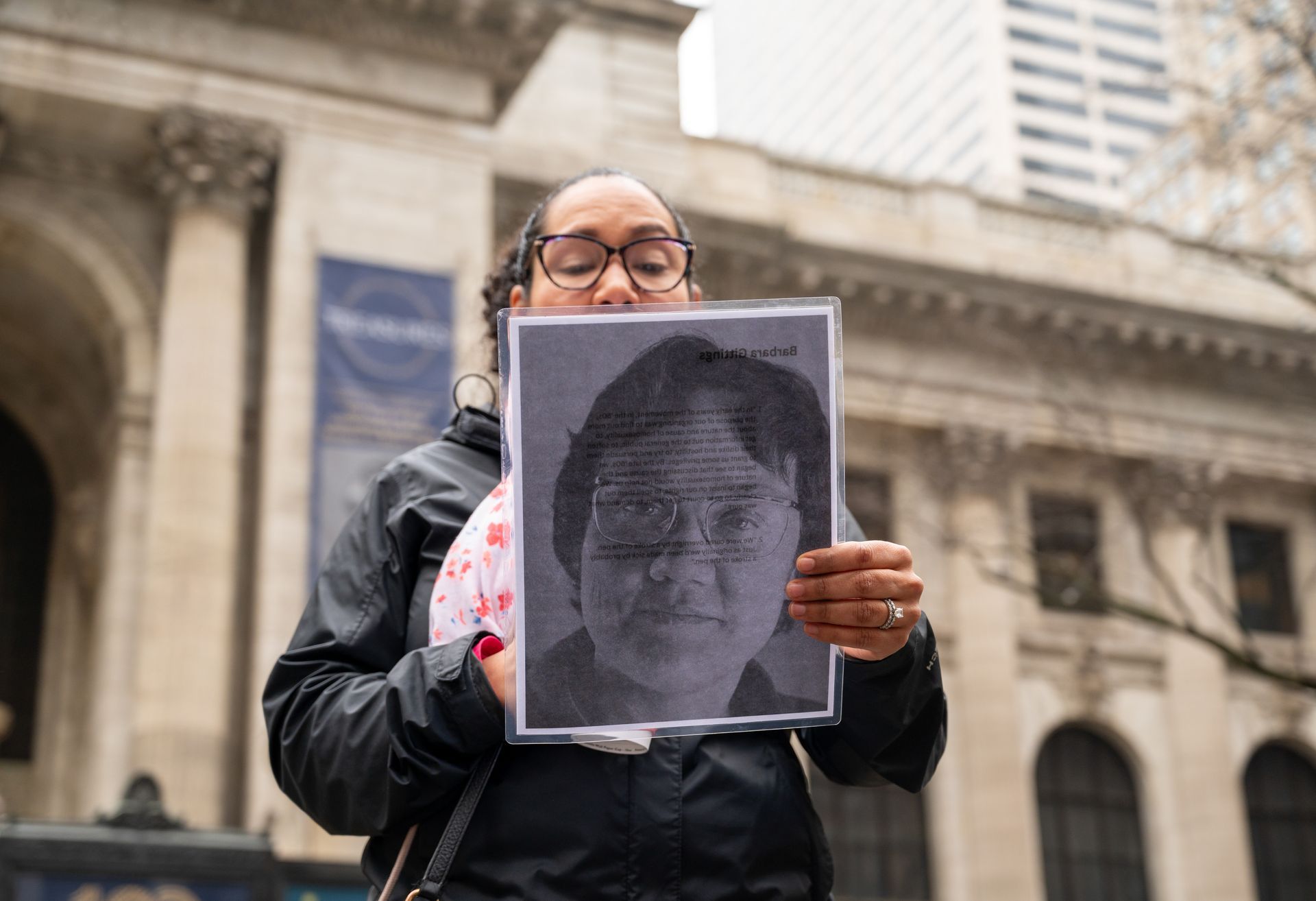
Overlooked women in history: Barbara Gittings.
She started the New York chapter of the Daughters of Bilitis and edited the latter magazine, but she was kicked out for being “too radical” (using her real name and putting actual photographs of lesbians on the cover).
Through her work she spent years fighting to get homosexuality removed from the APA’s list of mental illnesses (which is what allowed people to be fired or lose their housing). It was removed in 1973.
Want to learn about more women who you won’t believe you’ve never heard of?
Join our women’s history tour in NYC - running Saturdays & Sundays.
Send this to someone who understand that as far as we’ve come, there’s still so much farther to go.
Comment UNTOLD for details.

Central Park has over 20 historical statues of men and one dog. The first female statue didn't go up until 2020....
Want to help us acknowledge more women throughout New York City's history? Join our Women's History Tour of NYC, running Saturdays and Sundays.
Send this to a friend who loves history.
Comment UNTOLD for upcoming dates.

Best things to do in NYC if you want the real story, not the polite one. We get suggestions of women we should research, and also people telling us to “calm down”. Both prove the point.
Our women’s history tour runs Saturdays and Sundays.
Send this to someone who’d argue with a stranger about history.
Comment UNTOLD for the link.

NYC history you might have missed?
The woman behind the New Deal also got a shout-out in Dirty Dancing (yes, THAT Dirty Dancing).
Frances Perkins watched over 140 people die in the Triangle Shirtwaist Factory fire, many of them women and girls, and spent her life making sure it could never happen again.
From taking stakeholders on factory tours to working on policy that made actual labor justice change, all the way to becoming the first female cabinet member as FDR’s Secretary of Labor.
__
Join us on a tour or share with a friend to help witness & share their stories.
Comment UNTOLD forupcoming tour dates. Tours are running every Saturday and Sunday, spots are limited.

Another one for the historical women NYC we wished more people were talking about. You’ve been quoting this 1920s journalist without even realizing.
Her name was Dorothy Parker. In the 1920s, she held court every single day at the Algonquin Hotel, throwing back whiskey and trading one-liners.
By 24, she was New York’s only female drama critic, writing for Vanity Fair.
She was already famous for her wit. A popular newspaper columnist quoted her so often, people started repeating her lines without knowing where they came from.
She had no issue being direct. In January 1920, she reviewed a play starring Billie Burke, the actress who later played Glinda the Good Witch. She said Burke’s performance came across as trashy and vulgar. Maybe she was miscast.
The line landed badly. Burke was married to the powerful producer Florenz Ziegfeld, who demanded Dorothy be fired. It wasn’t her first starlet takedown either.
Her editor took her to the Plaza Hotel to break the news.
She ordered the most expensive dessert on the menu, and left.
She never held a desk job again.
Her poetry became a bestseller. She won awards. She wrote for Hollywood.
She also got arrested protesting the execution of Sacco and Vanzetti, which landed her on the FBI watch list and got her blacklisted from Hollywood.
She helped organize the Hollywood Anti-Nazi League.
When she died in 1967, she left her entire estate to a man she admired but had never met: Martin Luther King Jr.
The NAACP still receives royalties from her work.
—
Want to learn about more women you won’t belive you haven’t heard of?
Join our 2-hour walking tour running Saturdays & Sundays.
Comment UNTOLD for upcoming dates.

NYC history we wished social studies had spent more time on? The one who got fired over lunch at the Plaza Hotel (who then ordered the most expensive dessert on the menu, and left).
That’s Dorothy Parker. In the 1920s, she held court every single day at the Algonquin Hotel, throwing back whiskey and trading one-liners.
By 24, she was New York’s only female drama critic, writing for Vanity Fair.
She was already famous for her wit. A popular newspaper columnist quoted her so often, people started repeating her lines without knowing where they came from.
She had no issue being direct. In January 1920, she reviewed a play starring Billie Burke, the actress who later played Glinda the Good Witch. She said Burke’s performance came across as trashy and vulgar. Maybe she was miscast.
The line landed badly. Burke was married to the powerful producer Florenz Ziegfeld, who demanded Dorothy be fired. It wasn’t her first starlet takedown either.
Her editor delivered the news over that lunch at the Plaza.
She never held a desk job again.
Her poetry became a bestseller. She won awards. She wrote for Hollywood.
She also got arrested protesting the execution of Sacco and Vanzetti, which landed her on the FBI watch list and got her blacklisted from Hollywood.
She helped organize the Hollywood Anti-Nazi League.
When she died in 1967, she left her entire estate to a man she admired but had never met: Martin Luther King Jr.
The NAACP still receives royalties from her work.
—
Join our 2-hour women’s history tour to learn about more women you won’t believe you’ve never heard of.
Comment UNTOLD for the link.

This is one of the historical women who should have gotten her own unit in school... Meet the woman who left everything to Martin Luther King Jr. They had never met.
That’s Dorothy Parker. In the 1920s, she held court every single day at the Algonquin Hotel, throwing back whiskey and trading one-liners.
By 24, she was New York’s only female drama critic, writing for Vanity Fair.
She was already famous for her wit. A popular newspaper columnist quoted her so often, people started repeating her lines without knowing where they came from.
She had no issue being direct. In January 1920, she reviewed a play starring Billie Burke, the actress who later played Glinda the Good Witch. She said Burke’s performance came across as trashy and vulgar. Maybe she was miscast.
The line landed badly. Burke was married to the powerful producer Florenz Ziegfeld, who demanded Dorothy be fired. It wasn’t her first starlet takedown either.
Her editor took her to the Plaza Hotel to break the news.
She ordered the most expensive dessert on the menu, and left.
She never held a desk job again.
Her poetry became a bestseller. She won awards. She wrote for Hollywood.
She also got arrested protesting the execution of Sacco and Vanzetti, which landed her on the FBI watch list and got her blacklisted from Hollywood.
She helped organize the Hollywood Anti-Nazi League.
When she died in 1967, she left her entire estate to a man she admired but had never met.
The NAACP still receives royalties from her work.
—
Want to learn the story of more women who you’ve probably never heard of but probably should know?
Join our 2-hour walking tours on NYC’s women’s history.
Spots limited!
Comment UNTOLD for the link.

We thought women's history tours must exist in NYC. Turns out we were wrong.
there was no consistent company running Women's History tours where you could just book on a random Saturday with some friends, so we changed that.
You can join us every Saturday and Sunday (or book a private tour on a weekday), and in Queens at the end of the month for a special community event with @womenofastoria. ❤️ (comment ASTORIA for details)
_
Comment UNTOLD for upcoming dates.
Send this to your friend who you would take with you.

Local things to do in NYC: Celebrate the woman, past and present right here in Queens.👑
Join us and @womenofastoria August 23 for a Sunday afternoon of storytelling and oral history rewriting.
Women’s history isn’t missing because it didn’t happen. It’s missing because nobody wrote it down. We can’t fix the archive but we can change the narrative.
Who inspires you that you wish more people knew about? Could be someone historical or even someone in your own family. Inspiration comes in many forms.
We’ll tell you about the historical women who got left out, and the women changing Astoria right now that you might not even realize. all you have to do is show up and be ready to listen.
Come partake in oral history and us change the record. 💪
Comment ASTORIA for ticket details.

NYC history you might have missed?
The woman behind the New Deal also got a shout-out in Dirty Dancing (yes, THAT Dirty Dancing).
Frances Perkins watched over 140 people die in the Triangle Shirtwaist Factory fire, many of them women and girls, and spent her life making sure it could never happen again.
From taking stakeholders on factory tours to working on policy that made actual labor justice change, all the way to becoming the first female cabinet member as FDR's Secretary of Labor.
__
Join us on a tour or share with a friend to help witness & share their stories.
Comment UNTOLD forupcoming tour dates. Tours are running every Saturday and Sunday, spots are limited.

Things to do in New York City this weekend? How about a feminist walking tour of New York City that covers all of the women you won't believe you've never heard of?
Join us Saturdays and Sundays. Tickets now open for our Fall run.
Share this with whoever's in charge of your friend group plans. 💪
_
Comment UNTOLD for tour details.

Things happening in NYC this summer - A community storytelling meet up, focusing on the women of New York City's past and present.
Big thanks to @womenofastoria for featuring us and doing the work of recording the live stories that are happening right now.
__
Join us both later this month on August 23 at @chateaulewoof for an in-person storytelling event where you can meet your neighbors and talk about incredible women.
Comment ASTORIA for the event details.

To do in NYC this weekend: Take a women's history tour that tells stories about the women you won't believe you didn't know about.
__
Send those two for any things they know and race the history.
Comment UNTOLD for upcoming dates.

Things to do in New York City in August?
Join us & @womenofastoria for a Sunday afternoon of stories from NYC history that you won't believe you've never heard of as well as real women from the Astoria community who are doing incredible things.
We’ll have some conversation prompts so that we can brainstorm and share stories of women who are changing Astoria every day, for the better.
Come solo, come with a friend, come with an opinion about who deserves more credit than they got.
__
Send this to a friend who thinks they know NYC history.
Comment ASTORIA for tickets.

NYC history left some women out.
Our goal is to remedy that.
We walk this city pointing out the women history left out while @womenofastoria is writing down the ones your neighborhood hasn’t gotten around to yet.
Join us for this co-hosted evening to hear stories from our tour (women you won’t believe you’ve never heard of) as well as real women from the Astoria community who are doing incredible things.
We’ll have some conversation prompts so that we can brainstorm and share stories of women who are changing Astoria every day, for the better.
Come solo, come with a friend, come with an opinion about who deserves more credit than they got.
__
Send this to a friend who thinks they know NYC history.
Comment ASTORIA for tickets.

NYC history is being made every day.
Big thanks to @womenofastoria for featuring us and doing the work of recording the live stories that are happening right now.
__
Join us both later this month on August 23 at @chateaulewoof for an in-person storytelling event where you can meet your neighbors and talk about incredible women.
Comment ASTORIA for the event details.
![NYC history that didn’t make your textbook?
[*heads up - this one is a bit graphic with details of force feeding…]
This journalist who walked into a hospital in 1914 and asked them to strap her down and force a tube down her throat.
She wasn’t a patient. She was taking notes.
Djuna Barnes was 21 when she started writing for the Brooklyn Daily Eagle in 1913. She worked in stunt journalism. Reporters who didn’t just cover a story, they lived it.
In 1914, suffragettes in Britain were on hunger strike in prison. Guards were strapping them down and forcing a tube down their throats to keep them alive.
Djuna wanted her readers to understand what that actually felt like. So she checked into a hospital in New York and had it done to her.
She wrote every detail for New York World Magazine. The restraints. The tube. The choking. It ran with photographs taken mid procedure.
In 1921, McCall’s sent her to Paris to cover the American expatriate scene. She stayed almost two decades, interviewing James Joyce and running in the same circles as Gertrude Stein.
There she fell into a years-long relationship with an artist named Thelma Wood. When it ended, she turned the heartache into her novel Nightwood.
T.S. Eliot championed the manuscript himself, cutting some of its most explicit passages before it published in 1936. It’s now considered one of the earliest works of lesbian literature, decades ahead of its time.
Nightwood is still in print. Ask for it at your local bookshop.
__
Want to learn about more women who you won’t believe you’ve never heard of?
Join our two-hour tour running Saturdays and Sundays.
Comment UNTOLD for upcoming dates.](https://scontent-iad6-1.cdninstagram.com/v/t51.82787-15/764551035_17878892403619799_7121184515410436829_n.jpg?stp=dst-jpg_e35_tt6&_nc_cat=107&ig_cache_key=Mzk1NTg4ODUxMTIzNjE1OTQ1MA%3D%3D.3-ccb7-5&ccb=7-5&_nc_sid=a54f6b&efg=eyJlZmdfdGFnIjoiYmVzdF9pbWFnZV91cmxnZW4uQ0xJUFMuQzMifQ%3D%3D&_nc_ohc=VgXkPD7MaqAQ7kNvwHGEvDG&_nc_oc=AdokRSaaaF3IOc8mkVGWkk49WVylLbAfFA96k1VbpiGKBQBKpPFd8Qe9-IQTm7J1BUM&_nc_zt=23&_nc_ht=scontent-iad6-1.cdninstagram.com&edm=ANo9K5cEAAAA&_nc_gid=aFW-Ibeh5gbBwaye3aHTbA&_nc_tpa=Q5bMBQLSD8MTfwZebLdfFgcv5gbqyHTIgtKAn8YEMHqgJr9iYV5K7mnmXenHPbmNbP4EVGO1qwi2Zi5Qmw&oh=00_AQIOpYc5uVLGoAyQmKg77a_qO55hFvasAmo3GS-JhxaaOQ&oe=6AA24EF5)
NYC history that didn’t make your textbook?
[*heads up - this one is a bit graphic with details of force feeding…]
This journalist who walked into a hospital in 1914 and asked them to strap her down and force a tube down her throat.
She wasn’t a patient. She was taking notes.
Djuna Barnes was 21 when she started writing for the Brooklyn Daily Eagle in 1913. She worked in stunt journalism. Reporters who didn’t just cover a story, they lived it.
In 1914, suffragettes in Britain were on hunger strike in prison. Guards were strapping them down and forcing a tube down their throats to keep them alive.
Djuna wanted her readers to understand what that actually felt like. So she checked into a hospital in New York and had it done to her.
She wrote every detail for New York World Magazine. The restraints. The tube. The choking. It ran with photographs taken mid procedure.
In 1921, McCall’s sent her to Paris to cover the American expatriate scene. She stayed almost two decades, interviewing James Joyce and running in the same circles as Gertrude Stein.
There she fell into a years-long relationship with an artist named Thelma Wood. When it ended, she turned the heartache into her novel Nightwood.
T.S. Eliot championed the manuscript himself, cutting some of its most explicit passages before it published in 1936. It’s now considered one of the earliest works of lesbian literature, decades ahead of its time.
Nightwood is still in print. Ask for it at your local bookshop.
__
Want to learn about more women who you won’t believe you’ve never heard of?
Join our two-hour tour running Saturdays and Sundays.
Comment UNTOLD for upcoming dates.

Unique things to do in NYC this summer: a women’s history walking tour where you find out whose face you’ve been walking past your whole life.
Like Audrey Munson who was a supermodel of her day. Her likeness is at the main NYPL, the Met, Central Park, and even on top of the main municipal building next to the Brooklyn Bridge.
Her career had a tragic end and she ended committed to an asylum when she was 40…she lived until 104.
Send this to someone who thinks they know everything about NYC history.
The 2-hour tour runs Saturdays and Sundays in Midtown.
Comment UNTOLD for the link.

Things to do in NYC this weekend: a women’s history walking tour that covers the stories you should have learned in school.
Like Elizabeth Jennings Graham who refused to get off a NYC streetcar in 1854. She sued the transit company and won. Her lawyer Chester Arthur, then just out of law school, went on to become president. She became a teacher and opened the first kindergarten for Black children in New York City.
This 2-hour walk covers even more women we wish everyone had heard of.
Send this to a friend who thinks they know NYC history.
Comment UNTOLD for upcoming tour dates.

Unique things to do in NYC this summer: a women’s history walking tour that covers the stories nobody taught you.
Like the Chinese-American teenager who led 10,000 people up Fifth Avenue fighting for a right she’d never get to use.
Send this to someone who thinks they know NYC history.
—
The tour runs Saturdays + Sundays for a limited run.
Comment UNTOLD for the upcoming dates.

Things to do in NYC: a feminist walking tour that will genuinely change how you see this city - whether you like it or not.
This 2-hour women’s history tour covers the women who built Social Security, outsold every male author in America, and started the Women’s Caucus in the Senate.
History buffs love it but we’ve gotten more than a few DM’s to tell us to “calm down” or “stop complaining”.
Whatever helps the algorithm…
Limited spots:
Comment UNTOLD for tickets.
![History you didn't learn in writing class? Stunt journalism.
[*heads up - this one is a bit graphic with details of force feeding…]
This journalist who walked into a hospital in 1914 and asked them to strap her down and force a tube down her throat.
She wasn’t a patient. She was taking notes.
Djuna Barnes was 21 when she started writing for the Brooklyn Daily Eagle in 1913. She worked in stunt journalism. Reporters who didn’t just cover a story, they lived it.
In 1914, suffragettes in Britain were on hunger strike in prison. Guards were strapping them down and forcing a tube down their throats to keep them alive.
Djuna wanted her readers to understand what that actually felt like. So she checked into a hospital in New York and had it done to her.
She wrote every detail for New York World Magazine. The restraints. The tube. The choking. It ran with photographs taken mid procedure.
In 1921, McCall’s sent her to Paris to cover the American expatriate scene. She stayed almost two decades, interviewing James Joyce and running in the same circles as Gertrude Stein.
There she fell into a years-long relationship with an artist named Thelma Wood. When it ended, she turned the heartache into her novel Nightwood.
T.S. Eliot championed the manuscript himself, cutting some of its most explicit passages before it published in 1936. It’s now considered one of the earliest works of lesbian literature, decades ahead of its time.
Nightwood is still in print. Ask for it at your local bookshop.
__
Want to learn about more women who you won’t believe you’ve never heard of?
Join our two-hour tour running Saturdays and Sundays.
Comment UNTOLD for upcoming dates.
Comment BADASS for the link.](https://scontent-iad6-1.cdninstagram.com/v/t51.71878-15/762864433_1400308345616553_5279071553482531442_n.jpg?stp=dst-jpg_e35_tt6&_nc_cat=100&ig_cache_key=Mzk1NTc3MzIyNTMyNzgzNTMwOA%3D%3D.3-ccb7-5&ccb=7-5&_nc_sid=a54f6b&efg=eyJlZmdfdGFnIjoiYmVzdF9pbWFnZV91cmxnZW4uQ0xJUFMuQzMifQ%3D%3D&_nc_ohc=xvH1CDoDxJoQ7kNvwHSt8nx&_nc_oc=Adq4xcGKAEEdkS5byUjfLii4waJ7b4-cbxy5KIpx6_3ltSRheG74JMt6nXS-I22KamI&_nc_zt=23&_nc_ht=scontent-iad6-1.cdninstagram.com&edm=ANo9K5cEAAAA&_nc_gid=aFW-Ibeh5gbBwaye3aHTbA&_nc_tpa=Q5bMBQK0LvXbHUsKFEAoQ3ci3OWZ7a6vKlOqSDCBzAE4SPhT7yMio5OOyz_ta9ecCTyzfmFMQlhQy7tlqw&oh=00_AQJx5aLVQ_5EL929sseBISElLKsXK8K9UucBJJ9RmPb8Yg&oe=6AA24E60)
History you didn't learn in writing class? Stunt journalism.
[*heads up - this one is a bit graphic with details of force feeding…]
This journalist who walked into a hospital in 1914 and asked them to strap her down and force a tube down her throat.
She wasn’t a patient. She was taking notes.
Djuna Barnes was 21 when she started writing for the Brooklyn Daily Eagle in 1913. She worked in stunt journalism. Reporters who didn’t just cover a story, they lived it.
In 1914, suffragettes in Britain were on hunger strike in prison. Guards were strapping them down and forcing a tube down their throats to keep them alive.
Djuna wanted her readers to understand what that actually felt like. So she checked into a hospital in New York and had it done to her.
She wrote every detail for New York World Magazine. The restraints. The tube. The choking. It ran with photographs taken mid procedure.
In 1921, McCall’s sent her to Paris to cover the American expatriate scene. She stayed almost two decades, interviewing James Joyce and running in the same circles as Gertrude Stein.
There she fell into a years-long relationship with an artist named Thelma Wood. When it ended, she turned the heartache into her novel Nightwood.
T.S. Eliot championed the manuscript himself, cutting some of its most explicit passages before it published in 1936. It’s now considered one of the earliest works of lesbian literature, decades ahead of its time.
Nightwood is still in print. Ask for it at your local bookshop.
__
Want to learn about more women who you won’t believe you’ve never heard of?
Join our two-hour tour running Saturdays and Sundays.
Comment UNTOLD for upcoming dates.
Comment BADASS for the link.
![NYC history that didn’t make your textbook?
[*heads up - this one is a bit graphic with details of force feeding…]
This journalist who walked into a hospital in 1914 and asked them to strap her down and force a tube down her throat.
She wasn’t a patient. She was taking notes.
Djuna Barnes was 21 when she started writing for the Brooklyn Daily Eagle in 1913. She worked in stunt journalism. Reporters who didn’t just cover a story, they lived it.
In 1914, suffragettes in Britain were on hunger strike in prison. Guards were strapping them down and forcing a tube down their throats to keep them alive.
Djuna wanted her readers to understand what that actually felt like. So she checked into a hospital in New York and had it done to her.
She wrote every detail for New York World Magazine. The restraints. The tube. The choking. It ran with photographs taken mid procedure.
In 1921, McCall’s sent her to Paris to cover the American expatriate scene. She stayed almost two decades, interviewing James Joyce and running in the same circles as Gertrude Stein.
There she fell into a years-long relationship with an artist named Thelma Wood. When it ended, she turned the heartache into her novel Nightwood.
T.S. Eliot championed the manuscript himself, cutting some of its most explicit passages before it published in 1936. It’s now considered one of the earliest works of lesbian literature, decades ahead of its time.
Nightwood is still in print. Ask for it at your local bookshop.
__
Want to learn about more women who you won't believe you've never heard of?
Join our two-hour tour running Saturdays and Sundays.
Comment UNTOLD for upcoming dates.
Comment BADASS for the link.](https://scontent-iad3-1.cdninstagram.com/v/t51.71878-15/762629696_1758665991940789_6574471393851876141_n.jpg?stp=dst-jpg_e35_tt6&_nc_cat=104&ig_cache_key=Mzk1NTc3MTgyNTQ0NTM2ODYxNQ%3D%3D.3-ccb7-5&ccb=7-5&_nc_sid=a54f6b&efg=eyJlZmdfdGFnIjoiYmVzdF9pbWFnZV91cmxnZW4uQ0xJUFMuQzMifQ%3D%3D&_nc_ohc=1T4xB-VA6f8Q7kNvwH4kuDO&_nc_oc=AdpR_o6clT4x1czbJ52OqT-YvIzRbt2orn3Z1_lG4l4gGh80Cw6tylbtYClVBrwfD1c&_nc_zt=23&_nc_ht=scontent-iad3-1.cdninstagram.com&edm=ANo9K5cEAAAA&_nc_gid=aFW-Ibeh5gbBwaye3aHTbA&_nc_tpa=Q5bMBQJV1XEBvilk81KQ8bP04otxQt6N2sv-4yv-tVIjy1xkLQLLbBYdtTDi2tvP-CqUMYa_DpSOs_YrHQ&oh=00_AQKh8CgMLrexKkbsHfJ8VA769QvRWhkHY_g2zWffVpwewg&oe=6AA245DB)
NYC history that didn’t make your textbook?
[*heads up - this one is a bit graphic with details of force feeding…]
This journalist who walked into a hospital in 1914 and asked them to strap her down and force a tube down her throat.
She wasn’t a patient. She was taking notes.
Djuna Barnes was 21 when she started writing for the Brooklyn Daily Eagle in 1913. She worked in stunt journalism. Reporters who didn’t just cover a story, they lived it.
In 1914, suffragettes in Britain were on hunger strike in prison. Guards were strapping them down and forcing a tube down their throats to keep them alive.
Djuna wanted her readers to understand what that actually felt like. So she checked into a hospital in New York and had it done to her.
She wrote every detail for New York World Magazine. The restraints. The tube. The choking. It ran with photographs taken mid procedure.
In 1921, McCall’s sent her to Paris to cover the American expatriate scene. She stayed almost two decades, interviewing James Joyce and running in the same circles as Gertrude Stein.
There she fell into a years-long relationship with an artist named Thelma Wood. When it ended, she turned the heartache into her novel Nightwood.
T.S. Eliot championed the manuscript himself, cutting some of its most explicit passages before it published in 1936. It’s now considered one of the earliest works of lesbian literature, decades ahead of its time.
Nightwood is still in print. Ask for it at your local bookshop.
__
Want to learn about more women who you won't believe you've never heard of?
Join our two-hour tour running Saturdays and Sundays.
Comment UNTOLD for upcoming dates.
Comment BADASS for the link.

NYC walking tour for people who understand that while men usually take credit, women are more likely to share it.
On this two hour tour we cover the women we wish we had learned about in school. From the woman who worked on the New Deal, ended child labor (and more), to the one who got ‘homosexuality’ removed from the APA list of mental illnesses to the most famous 1900s super model who lived for 60 years in an asylum (spoiler - you probably pass her likeness all the time…)
Every single group leaves asking the same question, ‘how did we not know this???’
Runs Saturdays + Sundays for a limited run (+ private tours available)
Send this to the person you’d take on this tour.
Comment UNTOLD for the link.

If you’re in NYC this weekend, skip the lines.
Instead, take this women’s history tours lasts that includes zero names you learned in school.
Limited run - comment UNTOLD for the link.

A NYC walking tour that will genuinely change how you see this city.
We’ll cover, the woman who built Social Security, the 40-hour work week, and child labor laws. A woman who outsold every male author in America in 1856, and more.
Send this to a friend who would take this with you!
Comment UNTOLD for the link - limited dates.

Walking through Times Square, you see it everywhere.
On shirts, mugs, hats, bags...
I ♥ NY.
Mary Lawrence Wells was the one who came up with it.
Mary came to New York in the 1950s to break into advertising. She was a copywriter in an industry run entirely by men.
Instead of waiting for a seat at the table, she built her own.
In 1966, she founded Wells Rich Greene - her own agency. She competed for the biggest accounts and won: Alka-Seltzer, American Motors, and New York State.
In 1969, she took her company public and became the first female CEO of a company listed on the New York Stock Exchange.
And then she created the campaign that would define New York forever: I ♥ NY.
It’s been copied, parodied, and reproduced millions of times. It’s one of the most recognizable symbols in the world.
The graphic designer’s name comes up often, but the woman who created the entire campaign? Left out of the narrative somehow.
—
Want to hear more stories of women you won’t believe you’ve never heard of?
Comment UNTOLD for upcoming dates for our women’s history walking tour in NYC.

This NYC women’s history walking tour sold out last run - get your tickets for the next run now!
New York has always been full of women who refused to play by the rules. Like Victoria Woodhull who ran for President before women were even allowed to vote, and Shirley Chisholm who ran for President in 1972 despite having to sue to take part in Presidential debates.
Save this for your NYC staycation and send it to a friend who loves NYC history.
Limited run - comment UNTOLD for the link.

Unique things to do in NYC this summer: a women’s history walking tour where you find out whose face you’ve been walking past your whole life.
Audrey Munson was the most photographed woman in America in the 1910s. Her likeness is at the NYPL, the Met, Central Park, and the municipal building by the Brooklyn Bridge.
An obsessed fan murdered his wife to make room for her. It ended her career and she spent the next 60 years in an asylum.
Save this so you can spot her the next time you’re in the city.
The 2 hour tour runs Saturdays and Sundays, to Central Park.
Comment UNTOLD for the link.

Unique things to do in NYC - a female history walking tour where you meet the New Yorkers who changed history and never got the credit.
Like Mabel Ping Hua Lee who led one of the biggest suffrage marches up 5th ave. on horseback when she was 16-years-old, unable to gain the vote herself because of the Chinese Exclusion Act.
Save this for your NYC trip and send it to someone who loves NYC history.
Limited run - comment UNTOLD for the link.

NYC women’s history you probably haven’t heard of (despite a ticker tape parade and bio pic…): Trudy Ederle, a NYC open water swimmer. 💦
Trudy grew up on the Upper West Side, the daughter of a Manhattan butcher, and she was in the water almost before she could walk.
At 5, after a bout of measles, doctors warned her that swimming could damage her hearing further. But she said she was happiest between the waves.
In 1925, she attempted the English Channel and was pulled out after nearly nine hours. Her crew was sure she’d collapsed. She hadn’t, but she was disqualified all the same.
A year later, on August 6, 1926, she went back in. Rough tides swept her miles off course, turning a 21 mile crossing into a 35 mile swim. 🌊
Fourteen hours and 31 minutes after she started (!), she reached England. Faster than every man who had swum it before her, by nearly two hours.
New York gave her a ticker tape parade when she came home. Two million people showed up. President Coolidge called her “America’s best girl.” 🧐
The warning from childhood turned out to be right. Within a few years of the Channel swim, her hearing was mostly gone. She spent the rest of her career teaching deaf children to swim at a school in Queens.
—
Want to learn the stories of women you won’t believe you hadn’t heard of?
Join our 2-hour walking tour, running every Saturday & Sunday.
Comment UNTOLD for upcoming dates.

Unique Things to Do in New York City this Summer: women's history walking tour where you find out whose faces you've been walking past your whole life.
Like Audrey Munson, who was a super model in the early 1900s. Her likeness is at the main New York Public Library, The Met, Central Park, and even on top of the main municipal building next to the Brooklyn Bridge.
Her career had a tragic end, and she ended up committed to an asylum when she was forty. She lived until 104.
Send this to someone who thinks they know everything about New York City history.
_
Join us Saturdays and Sundays for a two-hour walk where we share the stories of incredible women you've probably never heard of but should absolutely know...
Comment UNTOLD for upcoming dates.

The New York 20 Bridges swim circles Manhattan every year, 28 miles of open water. In 1926, a 19 year old had already beaten that kind of distance, and broken a record held only by men.
Trudy Ederle grew up on the Upper West Side, the daughter of a Manhattan butcher, and she was in the water almost before she could walk.
At 5, after a bout of measles, doctors warned her that swimming could damage her hearing further. But she said she was happiest between the waves.
In 1925, she attempted the English Channel and was pulled out after nearly nine hours. Her crew was sure she’d collapsed. She hadn’t, but she was disqualified all the same.
A year later, on August 6, 1926, she went back in. Rough tides swept her miles off course, turning a 21 mile crossing into a 35 mile swim. 🌊
Fourteen hours and 31 minutes after she started (!), she reached England. Faster than every man who had swum it before her, by nearly two hours.
New York gave her a ticker tape parade when she came home. Two million people showed up. President Coolidge called her “America’s best girl.”
The warning from childhood turned out to be right. Within a few years of the Channel swim, her hearing was mostly gone. She spent the rest of her career teaching deaf children to swim at a school in Queens.
—
Want to learn the stories of women you won’t believe you hadn’t heard of?
Join our 2-hour walking tour, running every Saturday & Sunday.
Comment UNTOLD for upcoming dates.

The best shopping in NYC? Why not go female-owned?
The little data there is was hard to compare, but using what we could find, here are the best neighborhoods for female-owned shops and restaurants.
What neighborhoods would you rank?
#3 @flatironny had the longest list of female-owned businesses out of any official Manhattan BID
#2 ~ 2 in 3 participating locations in @shopsmallastoria’s annual crawl show are female-owned
#1 With the most comprehensive data, @dumbo_brooklyn showed 62% of small bsuinesses owned by women.
__
Want to learn more about women’s impact in NYC?
Join our women’s history tour which covers all the women you won’t believe you haven’t heard of.
Comment UNTOLD for upcoming dates.

Female-owned local shops in NYC?
The data is imperfect (surprise, surprise), but after scraping the internet, we were able to find a few official lists and stats.
#3 @flatironny had the longest list of female-owned businesses out of any official Manhattan BID
#2 ~ 2 in 3 participating locations in @shopsmallastoria’s annual crawl show are female-owned
#3 With the most comprehensive data, @dumbo_brooklyn showed 62% of small bsuinesses owned by women.
What neighborhoods would you rank?
__
If you like knowing who actually built the city around you, join our women’s history tour covering all the women you won’t believe you haven’t heard of.
Comment UNTOLD for upcoming dates.

Things to do in NYC this weekend: walk the tour that can satisfy your inner feminist rage.
If the following sentences frustrate you:
- She built the organization. He gets remembered as the founder.
- She wrote the bestseller. They assumed it was written by a man.
- Her face is everywhere. Her name is nowhere.
Then you’re in the right place!
Join us Saturdays & Sundays for a 2 - hour walking tour that covers the history of women you’ve probably never heard of, but we all should know.
—
Comment BADASS for upcoming tour dates

In 1838, a woman who had already freed at least 11 people from slavery had to stand trial to prove she hadn’t secretly sold anyone into it.
Hester Lane was born enslaved in Maryland. She made her way to New York and built a life as a free woman, running her own whitewashing business, house painting, and teaching herself French along the way.
By the 1840s, Hester was living comfortably enough that she used that money to buy freedom for at least 11 people, entire families included. To do it, she traveled back into slave states herself, risking her own freedom every time she crossed that line.
Hester was well known in New York’s Black abolitionist circles. She sat on the board of the African Dorcas Association, a mutual aid society for Black families, and moved in the same world as David Ruggles, an abolitionist who spent his life protecting free Black New Yorkers from kidnappers looking to sell them south.
In 1838, a woman named Martha Johnson, after a dispute over a property she rented from Hester, accused her of kidnapping and selling people into slavery. A formal committee investigated, meeting at Ruggles’s own home. They ruled in Hester’s favor. A public letter clearing her name ran in The Colored American.
We don’t know how Hester became free, or what she did in the years after that trial. What we do know is that when her name was on the line, the same community she’d spent her fortune protecting stood up and cleared it.
__
Want to learn about more women you probably haven’t heard of but should absolutely know?
Join our two-hour walking tour.
Comment BADASS for upcoming dates.

A formerly enslaved woman built a business for herself in 1830s New York, and used the money to buy freedom for at least 11 people.
Hester Lane was born enslaved in Maryland. She made her way to New York and built a life as a free woman, running her own whitewashing business, house painting, and teaching herself French along the way.
By the 1840s, Hester was living comfortably enough that she used that money to buy freedom for at least 11 people, entire families included. To do it, she traveled back into slave states herself, risking her own freedom every time she crossed that line.
Hester was well known in New York’s Black abolitionist circles. She sat on the board of the African Dorcas Association, a mutual aid society for Black families, and moved in the same world as David Ruggles, an abolitionist who spent his life protecting free Black New Yorkers from kidnappers looking to sell them south.
In 1838, a woman named Martha Johnson, after a dispute over a property she rented from Hester, accused her of kidnapping and selling people into slavery. A formal committee investigated, meeting at Ruggles’s own home. They ruled in Hester’s favor. A public letter clearing her name ran in The Colored American.
We don’t know how Hester became free, or what she did in the years after that trial. What we do know is that when her name was on the line, the same community she’d spent her fortune protecting stood up and cleared it.
__
Want to learn about more women you probably haven't heard of but should absolutely know?
Join our two-hour walking tour.
Comment BADASS for upcoming dates.

In 1870, a Civil War veteran named Martin Hildebrandt opened what’s considered the country’s first tattoo shop, a few blocks from where Millie would later work. By 1891, the trade had its own patented machine, modeled after Thomas Edison’s pen. For decades that world belonged to men. If a woman was tattooed at all, she was usually the one being looked at, a sideshow attraction, covered in ink as the show itself.
Millie started that way too. Then she picked up a machine herself. Reportedly she practiced on her own skin first, more than 300 times, before she ever tattooed a stranger.
By the 1930s, Millie was running her own shop out of a Bowery barbershop. She was the only woman doing the work in New York City for over a decade. We know she was respected. Sailors sought her out by name, coming back again and again as repeat customers.
Decades later, tattoo historian Michael McCabe would name Millie right alongside the men considered the founders of the entire trade, writing that she helped set the first standards for the modern incarnation of the art.
__
Learn about more women like Millie, women who have incredible stories but you've probably never heard of on our two-hour women's history tour.
Comment BADASS for future tour dates.

Things to do in New York City this weekend? How about a female history walking tour.
It's not for everyone, but the people who get it really get it.
The 2-hr Tour covers the stories of women you probably haven't heard of but should absolutely know.
__
Comment FALLDATES to get a heads up when we launch our next run of public tours for Sept-Dec

Unique things to do in NYC this summer for people who need some positive news. 💝
Fanny Fern was the highest-paid newspaper columnist in America in 1856 (after her own brother publicly called her vulgar for it).
Mabel Ping-Hua Lee led 10,000 suffragists up Fifth Avenue on horseback at 16, then watched the 19th Amendment pass without her, because of the Chinese Exclusion Act.
Send this to the woman in your group chat who’s tired of explaining why she’s qualified.
—
Comment FALLDATES to get on the list for when we launch our September through December run.

Things to do in NYC this weekend for people who know some fights are still being fought.
Barbara Gittings spent years pressuring the American Psychiatric Association to remove homosexuality from its diagnostic manual, and picketed the White House to do it.
Antonia Pantoja took the NYC Board of Education to federal court and won the case that created bilingual education in America.
Send this to the friend who thinks the fight for equality wrapped up in the 90s.
—
Comment FALLDATES to get an update when we launch future tour dates, September through December.